Trenchless Pipe Lining in Lakewood, CA | Lakewood CA Plumbing Guys
CIPP trenchless lining for Lakewood's pre-1965 clay sewer laterals. No open-trench excavation, no landscape disruption. Call (562) 358-3931.
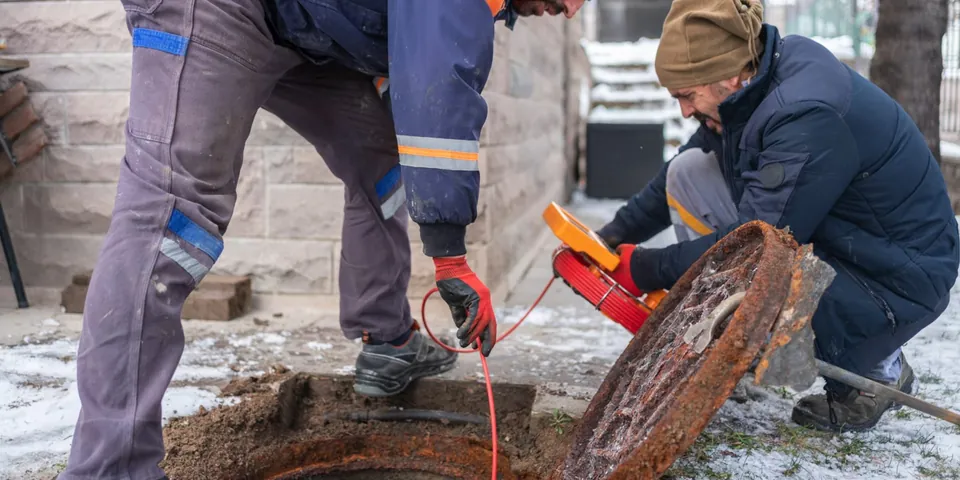
Technicians working over an open sewer access point provides a practical reference for the Trenchless Pipe Lining in Lakewood, CA page.
Trenchless Lining for Lakewood's Pre-1965 Clay Sewer Laterals
Lakewood's residential sewer laterals installed during the Lakewood Park Corporation's 1950 to 1965 build are primarily clay pipe. Clay performs adequately when it holds its original alignment, but after 60 to 70 years two deterioration patterns dominate: root intrusion at clay pipe joints, where the joint gaps that develop as clay dries and shifts allow tree roots from Lakewood's mature jacaranda and magnolia street plantings to enter the pipe bore; and cracked or offset joints from soil movement and settlement. The result is recurring sewer backups and slow-draining fixtures that snaking addresses temporarily but does not resolve.
Cured-in-place pipe (CIPP) trenchless lining inserts an epoxy-saturated flexible liner into the existing clay pipe from an access point at either end, inflates it against the pipe wall, and cures it in place. The result is a smooth, jointless epoxy pipe inside the original clay shell with a service life estimated at 50 years. No root entry points remain after curing. Lakewood's established residential landscaping (including mature trees along parkway strips, concrete driveways over lateral pathways, and foundation plantings along house walls) makes trenchless lining particularly valuable where open-trench replacement would require removing or destroying significant hardscape and vegetation.
Signs Your Lakewood Sewer Lateral Needs Lining or Replacement
Recurring Backups Within Weeks of Snaking
A lateral that backs up again within weeks of being cleared has a structural issue, not a debris buildup. Root intrusion at clay pipe joints grows back rapidly after snaking because the entry points at the joints remain open. CIPP lining seals those entry points permanently and stops the regrowth cycle at its source.
Multiple Slow Fixtures Simultaneously
When more than one fixture drains slowly at the same time (kitchen sink, hall bathroom, and main floor toilet all together), the restriction is in the shared main line or the lateral between the house and the city sewer main, not at an individual fixture drain. Main line access is needed for proper assessment and clearing.
Camera Shows Root Intrusion or Cracked Joints
A camera inspection that shows roots inside the clay lateral confirms active intrusion. Light root feathering in a pipe with otherwise sound structure is an ideal CIPP candidate. A lateral with collapsed sections or severe joint offsets requires open-trench assessment for those specific sections before lining is appropriate for the rest of the run.
Foul Drain Odor at Floor Drains or Along the Lateral Path
Hydrogen sulfide escaping from cracked clay pipe joints can sometimes be detected at floor drains or along the lateral path in the yard. Persistent odor from a lateral with compromised joints indicates deterioration that warrants camera inspection to assess whether lining or replacement is the correct response.
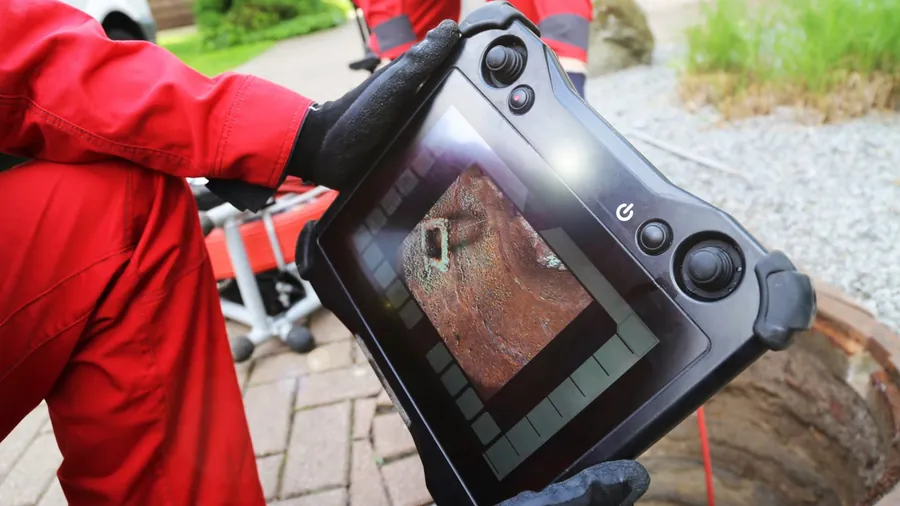
This detail highlights camera monitor checking a sewer line during trenchless work, a key part of the work described for Trenchless Pipe Lining in Lakewood, CA.
How CIPP Trenchless Lining Works in a Lakewood Residential Property
The process starts with a full camera inspection of the lateral to confirm it is a lining candidate. A lateral with severely collapsed sections or large root masses requires hydro jetting before lining, and potentially open-trench work for specific sections. Once confirmed as a candidate, the lateral is cleaned with hydro jetting to remove root mass and debris from the pipe wall, then measured for liner sizing.
The epoxy-impregnated liner is inserted from the access point, inflated against the clay pipe wall, and cured using steam or ultraviolet light depending on the liner system used. Total installation and curing time for a standard Lakewood residential lateral of 50 to 80 feet is typically four to eight hours. After curing, a post-installation camera confirms full liner seating, and service is restored the same day. There is no excavation unless the pre-inspection identifies a condition requiring access.
Trenchless Pipe Lining Cost in Lakewood, CA
CIPP lining in Lakewood typically costs $100 to $250 per linear foot for a standard 4-inch residential lateral, depending on pre-treatment requirements and access complexity. A 60-foot lateral, which is typical for Lakewood's residential lot depth, runs approximately $6,000 to $15,000 complete. Open-trench replacement for the same run is typically $8,000 to $20,000 before landscape and hardscape restoration. We provide a written estimate after the camera inspection confirms the scope.
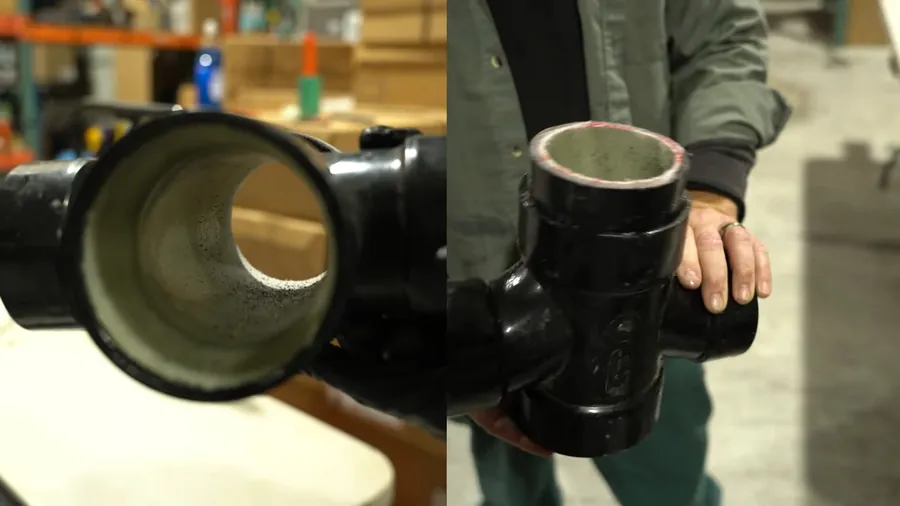
The photo focuses on pipe lining sample showing a smooth repaired interior so the Trenchless Pipe Lining in Lakewood, CA process is easier to understand.
Frequently Asked Questions
What is CIPP trenchless pipe lining and how does it work?
Cured-in-place pipe (CIPP) lining inserts an epoxy-saturated felt or fiberglass liner into the existing deteriorated pipe and cures it in place, forming a smooth, jointless epoxy pipe inside the original host pipe. No excavation is required except at existing cleanout access points. The liner seals root entry points, repairs cracked pipe walls, and restores hydraulic capacity without removing the original clay pipe.
Does trenchless lining work on Lakewood's older clay sewer laterals?
Yes, in most cases. Clay pipe in sound structural alignment with root intrusion and joint cracks is an ideal CIPP candidate. Laterals with severely collapsed sections, large displaced joint offsets, or major pipe deformation may require open-trench assessment for those specific sections. A camera inspection determines which approach applies to a specific lateral before any work is proposed.
How long does trenchless pipe lining last?
CIPP lining manufacturers estimate a 50-year service life for cured epoxy liner in residential sewer pipe, based on accelerated aging tests and field performance data for installations placed since the 1980s. Actual service life depends on installation quality, curing method, and subsequent hydraulic loading. A properly installed liner in a Lakewood residential lateral should outlast the original clay pipe by several decades.
What does trenchless pipe lining cost compared to open-trench sewer replacement in Lakewood?
Direct per-foot costs for CIPP lining and open-trench replacement are often comparable. The advantage of trenchless lining is elimination of excavation and landscape restoration costs, which in Lakewood's established residential neighborhoods with mature trees, concrete driveways, and foundation plantings can add $5,000 to $15,000 to an open-trench project. Total project cost including restoration is typically $3,000 to $8,000 less for trenchless on the same run length.