
Licensed & Insured · 24/7 Emergency Plumber · Serving Lakewood & SE LA Call (562) 358-3931

How CIPP Trenchless Sewer Lining Works and Why It’s the Right Fix for Lakewood’s Clay Laterals

CIPP (cured-in-place pipe) lining creates a new structural pipe inside your existing clay sewer lateral without open-trench excavation. For Lakewood’s 65-to-75-year-old clay laterals with root intrusion, it is typically the most cost-effective permanent solution.

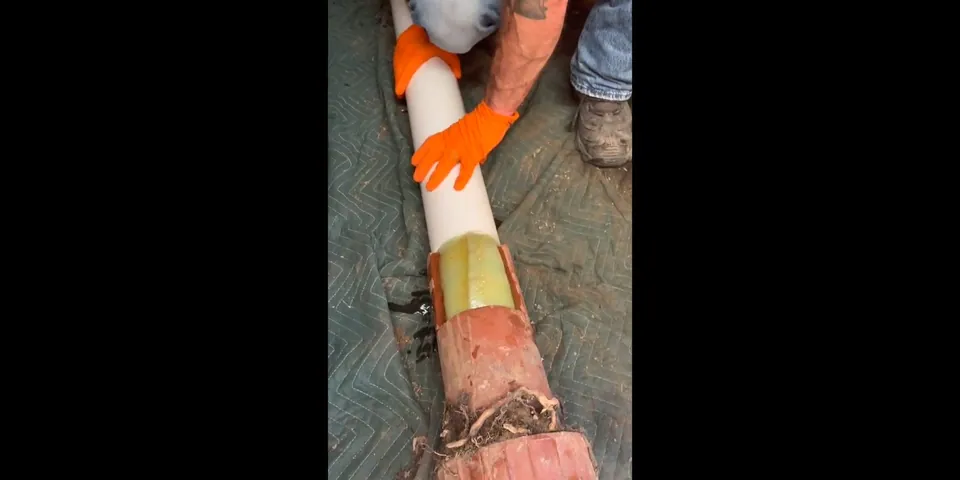
Trenchless liner being fed into a sewer pipe for How CIPP Trenchless Sewer Lining Works and Why It’s the Right Fix for
The visible trenchless liner being fed into a sewer pipe shows what technicians look for during How CIPP Trenchless Sewer Lining Works and Why It’s the Right Fix for work.

What Is CIPP Trenchless Lining?

CIPP stands for Cured-In-Place Pipe. It is a trenchless rehabilitation method for sewer laterals (and larger sewer pipes) that installs a new structural epoxy-resin liner inside the existing pipe without digging up the yard or the street. The result is a continuous, joint-free pipe within the original pipe, with an interior surface that is smoother than the original clay, impervious to root penetration at joint locations, and structurally independent of the host pipe. CIPP-lined laterals typically carry a 50-year warranty from the liner manufacturer and are recognized by California plumbing codes as an approved rehabilitation method for residential sewer laterals.

CIPP lining is not a patch, a coating, or a temporary fix. The cured liner is a structural pipe in its own right, with wall thickness and material properties that allow it to function independently even if the surrounding host pipe eventually deteriorates further. For clay laterals in Lakewood homes that have intact overall alignment but compromised joint integrity from root intrusion and age-related deterioration, CIPP lining is the appropriate rehabilitation method that addresses the actual failure condition rather than temporarily clearing a symptom.

Why Lakewood’s Clay Sewer Laterals Are Ideal CIPP Candidates

Lakewood's residential sewer laterals from the original 1950 to 1965 construction are predominantly clay pipe, specifically the hub-and-spigot vitrified clay pipe (VCP) that was the standard for residential sewer construction in the post-WWII period. This clay pipe has been in service for 60 to 75 years, and in the presence of Lakewood's mature residential street tree canopy (trees that were planted as small saplings in the early 1950s and have now had 70 years to develop extensive root systems), the clay pipe joints have been subject to continuous root pressure for decades.

The failure mode in Lakewood clay laterals is almost always root intrusion at the hub-and-spigot bell joints, which are the points where individual pipe sections connect. As these joints widen slightly from decades of soil movement and the softening of the joint seal material, root tips penetrate the gap and grow into the pipe bore. CIPP lining addresses this failure mode perfectly: the continuous liner seals all joint gaps with an epoxy resin that root systems cannot penetrate, permanently eliminating the root entry points. For Lakewood clay laterals that have intact structural alignment (meaning the pipe has not shifted, collapsed, or developed significant offset sections), CIPP is the most effective and least invasive rehabilitation method available.

The CIPP Process: How It Works Step by Step

Step 1: Camera Inspection to Confirm CIPP Eligibility

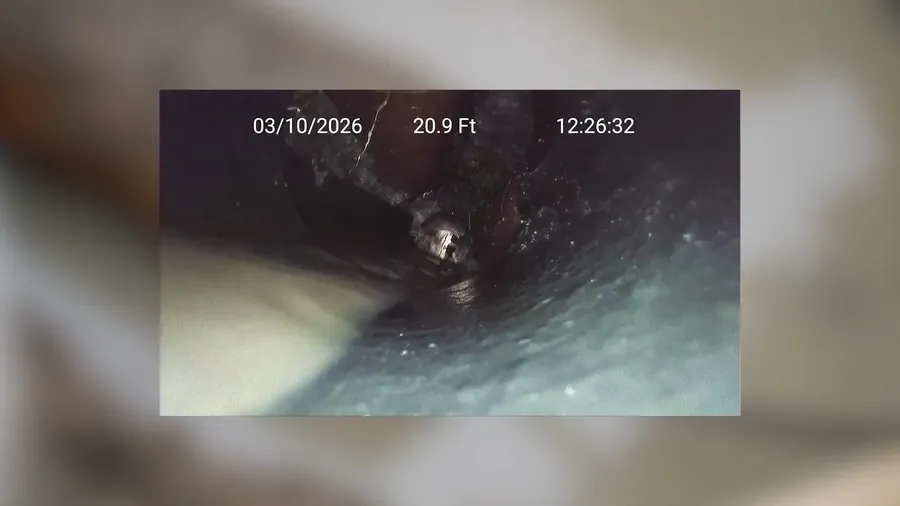
CIPP lining cannot be performed on a lateral with collapsed sections, severe joint offsets greater than approximately 20 percent of the pipe diameter, or sections that have shifted out of alignment significantly. Before committing to CIPP, a camera inspection of the full lateral from house cleanout to city main confirms the structural integrity and alignment of the host pipe, identifies any access-point limitations, and documents the extent and location of the root intrusion. This inspection video is also the baseline record against which the post-lining inspection is compared to confirm the liner installation.
Step 2: Hydro-Jetting to Prepare the Pipe Interior

The clay pipe interior must be thoroughly cleaned before the liner can be inserted and cured. We use high-pressure hydro-jetting to remove root mass, sediment, grease, and debris from the pipe bore. The hydro-jet nozzle runs from the house cleanout to the city main connection, cutting root intrusions flush with the pipe wall and leaving a clean interior surface for the epoxy resin to bond to. After jetting, a second camera pass confirms that the pipe interior is clean and that the structural conditions confirmed in Step 1 are unchanged after clearing.

Step 3: Liner Insertion, Inflation, and Curing

The CIPP liner is a flexible felt tube saturated with liquid epoxy resin. We insert the liner through the house cleanout access point and use compressed air or water pressure to invert it through the pipe length, so the resin-saturated felt turns inside-out as it travels through the pipe, pressing the resin-bearing surface firmly against the clay pipe wall. Once the liner is fully inserted and the felt is pressed uniformly against the host pipe interior, the resin is cured in place. Depending on the specific product and curing method (ambient cure, heat cure using hot water, or UV light cure), the curing process takes 30 minutes to a few hours.

Step 4: Final Camera Inspection to Confirm Installation

After curing, a final camera inspection runs the full length of the liner to confirm uniform installation with no delamination, wrinkles, or voids in the liner surface. The inspection video documents the finished liner interior, the sealed joint locations, and any service lateral connections that have been cut open to restore flow through branch connections. This post-installation video is the quality confirmation document for the project and is provided to the homeowner as a record of the completed work.

Old cast iron drain pipe with corrosion and scaling for How CIPP Trenchless Sewer Lining Works and Why It’s the Right Fix for
This view of old cast iron drain pipe with corrosion and scaling helps explain the repair details discussed for How CIPP Trenchless Sewer Lining Works and Why It’s the Right Fix for.

What CIPP Can and Cannot Fix

CIPP lining is appropriate for clay laterals with root intrusion at intact or minimally offset joints, general interior surface corrosion and roughening, minor circumferential cracking, and some degree of calcite or mineral deposit buildup (which hydro-jetting removes before lining). CIPP is not appropriate for laterals with collapsed sections, severe joint offsets or displacements greater than the liner can bridge, pipe sections that have separated or pulled apart by more than a few inches, or pipe bends that are too tight for the liner to navigate.

For Lakewood clay laterals, the camera inspection is the definitive assessment of CIPP eligibility. The majority of Lakewood laterals that present with recurring backup symptoms are CIPP candidates, because the failure mode (root intrusion at aging bell joints in otherwise structurally sound clay pipe) is exactly the condition CIPP addresses best. When the camera inspection reveals a condition that excludes CIPP, open-trench repair of the damaged section or full lateral replacement with new pipe are the appropriate alternatives.

CIPP vs. Open-Trench Lateral Replacement

Open-trench sewer lateral replacement involves excavating the yard and street from the house connection to the city main, removing the old clay pipe, and installing new PVC pipe in its place. This is the definitive solution for laterals that are not CIPP candidates due to structural failure, and it is also the appropriate approach when the city main connection requires repair or when the lateral depth makes trenchless access impractical. Open-trench replacement typically costs $4,000 to $10,000 or more for a full residential lateral depending on depth, length, and street or sidewalk crossing requirements.

For CIPP-eligible Lakewood laterals, CIPP lining is typically less expensive than open-trench replacement, requires no excavation of the yard or public right-of-way, and can often be completed in a single day with the sewer service restored the same day. The liner's 50-year expected service life means CIPP is a permanent rehabilitation rather than a temporary fix. We provide written estimates for both CIPP lining and open-trench replacement for every sewer lateral assessment, so you can compare the options on cost, timeline, and disruption. Call (562) 358-3931 for a camera inspection and CIPP assessment for your Lakewood sewer lateral.

Sewer Camera Inspection and CIPP Lining in Lakewood

Camera inspection confirms eligibility before any commitment. Written CIPP and replacement estimates. Serving Lakewood and SE LA, 24/7.

Call (562) 358-3931