Licensed & Insured · 24/7 Emergency Plumber · Serving Lakewood & SE LA Call (562) 358-3931

Tree Roots in Lakewood Sewer Lines: Why It Keeps Happening and the Permanent Fix

If you have had your Lakewood sewer line cleared by cable and the backup returned within six months, root intrusion in an aging clay lateral is almost certainly the cause. Cable clearing does not remove roots; it cuts them back temporarily. Here is why, and what the permanent resolution looks like.

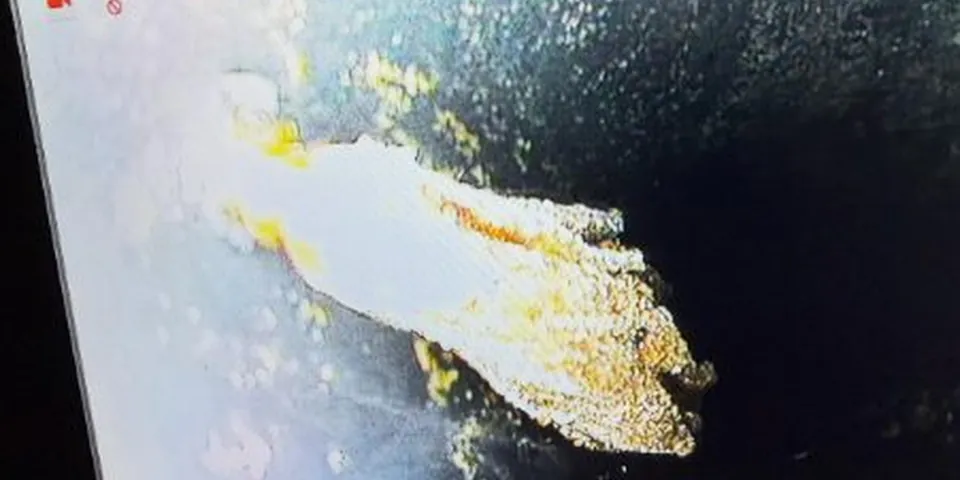
Camera monitor showing root intrusion inside a sewer line for Tree Roots in Lakewood Sewer Lines: Why It Keeps Happening and the
This detail highlights camera monitor showing root intrusion inside a sewer line, a key part of the work described for Tree Roots in Lakewood Sewer Lines: Why It Keeps Happening and the.

Why Tree Roots Target Sewer Lines

Tree roots grow toward moisture, oxygen, and nutrients. A residential sewer lateral carries all three in abundance: the warm, nutrient-rich wastewater inside the pipe produces water vapor that permeates the soil around the clay pipe, and any gap in the clay pipe joints releases that vapor into the surrounding soil. Root systems are extremely sensitive to these gradients and will extend toward the source over months and years until they reach the gap.

In Lakewood, this process has had 65 to 75 years to play out. The trees planted in the residential streets and yards when the Lakewood Park Corporation built the city in 1950 to 1965 are now mature trees with root systems that extend far beyond the visible canopy. A large parkway tree with a 40-foot canopy may have a root system extending 60 to 100 feet in all directions. Most Lakewood residential lots have at least two or three such mature trees within root-extension range of the sewer lateral, which runs from the house to the city main typically below the front yard and public sidewalk. The combination of 65 to 75-year-old clay pipe with widened bell joints and 65 to 75-year-old mature trees with extensive root systems produces the recurring root intrusion conditions that are one of the most common plumbing service calls in Lakewood.

The Recurring Backup Cycle and Why Cable Clearing Does Not Last

Cable clearing (also called snaking or rodding) is the standard immediate response to a sewer backup caused by root intrusion. A motorized cable with a cutting head is run through the line from the house cleanout to the city main, cutting the root mass inside the pipe at the cutting head's path of travel. This restores flow through the line by removing the immediate obstruction. The problem is that cable clearing does not remove the roots from inside the pipe; it cuts them back to near the pipe wall surface at the location of the cutting head. The root stubs that remain at the bell joints where the intrusion began are still alive and still connected to the root system of the tree above. Within three to twelve months, those root stubs regrow into the pipe bore, and the backup cycle begins again.

The recurring backup timeline is usually predictable for a given property: if the first backup occurred, was cleared, and returned in eight months, the next cycle will likely also be eight to twelve months. This predictability is the evidence that the root intrusion is progressing at a steady rate, not being resolved by the clearing. Each clearing temporarily extends the interval before the next backup, but the root growth continues and the cycle progressively shortens over several years as the root mass inside the pipe becomes more established. The only way to end the cycle is to permanently seal the entry points where roots are entering the lateral.

How Root Intrusion Progresses in Lakewood’s Clay Laterals

Stage 1: Root Tip Entry at Bell Joints

Root tips, which are very fine and flexible, enter through gaps in the clay pipe bell joints. These gaps develop as the original joint seal material (typically oakum and cement in 1950s construction) softens, shrinks, or cracks over decades of soil movement, thermal cycling, and the normal aging of the joint materials. A gap of only a few millimeters is sufficient for a fine root tip to penetrate. Once inside the pipe, the root encounters the moisture-rich interior environment and grows aggressively.

Stage 2: Root Mass Growth Inside the Pipe

Root tips that enter the pipe interior grow into root masses over months and years. These masses can grow large enough to fill a significant portion of the pipe bore before they cause the first backup, which means that by the time the first backup symptom appears, the root intrusion has typically been developing for one to three years. Camera inspection at first backup almost always reveals root masses that are more extensive than the homeowner expected, with intrusion at multiple joint locations along the lateral rather than at a single point.

Stage 3: Structural Impact From Root Pressure

In Lakewood clay laterals where root intrusion has been present for many years without remediation, the sustained pressure of growing root masses can widen bell joints to the point where the pipe alignment is affected. In advanced cases, roots can exert enough force to crack clay pipe sections adjacent to the joint entry points. Camera inspection is essential to determine whether the Lakewood lateral has root-only intrusion at intact joints (CIPP candidate) or has developed structural damage from sustained root pressure (may require open-trench repair or replacement).

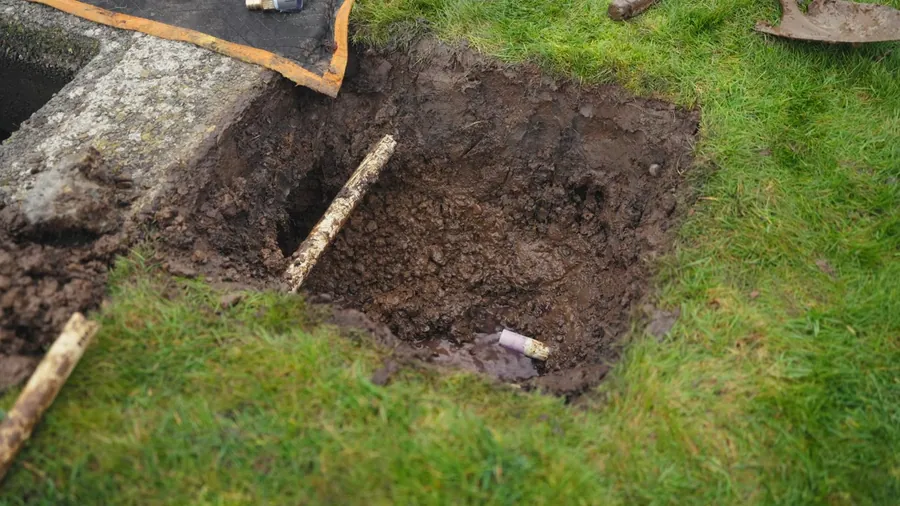
Yard excavation around roots and buried sewer piping for Tree Roots in Lakewood Sewer Lines: Why It Keeps Happening and the
The photo focuses on yard excavation around roots and buried sewer piping so the Tree Roots in Lakewood Sewer Lines: Why It Keeps Happening and the process is easier to understand.

Camera Inspection: Knowing What You Are Actually Dealing With

A sewer camera inspection is the necessary first step before deciding on a permanent resolution for root intrusion in a Lakewood lateral. The camera shows the actual pipe interior throughout the full lateral length, from the house cleanout to the city main, revealing the number and location of root entry points, the extent of root mass at each location, the structural condition of the clay pipe at and between the intrusion points, and whether there are any sections with joint displacement or pipe cracking that would affect the appropriate repair method.

The camera inspection findings determine whether the lateral is a candidate for CIPP trenchless lining (most Lakewood clay laterals with root-only intrusion at structurally intact joints), for targeted open-trench repair of a specific damaged section followed by CIPP of the remainder, or for full lateral replacement in cases where the structural damage is too extensive for lining. We provide the camera inspection video to the homeowner as part of every sewer assessment and explain the findings before presenting repair options and estimates.

The Permanent Fix: CIPP Lining vs. Continued Clearing

For Lakewood clay laterals with root-only intrusion at intact or minimally affected joints, CIPP trenchless lining is the permanent resolution. The CIPP liner seals all bell joint gaps throughout the lateral with an epoxy resin that root tips cannot penetrate. After lining, the lateral has no joints to enter, and roots cannot regrow through the continuous liner surface. The 50-year manufacturer warranty on the liner means CIPP is a genuine long-term solution rather than a temporary delay of the next backup.

The cost comparison between continued cable clearing and CIPP lining is straightforward for most Lakewood homeowners: if cable clearing costs $250 per visit and the lateral needs clearing twice per year, that is $500 per year in perpetuity, in addition to the inconvenience of the recurring backups and the progressive worsening of the root intrusion over time. CIPP lining costs more upfront, typically $2,500 to $5,000 depending on the lateral length and access conditions, but ends the clearing cycle permanently and protects against additional root intrusion for the lateral's remaining service life. For most Lakewood homeowners who have had two or more clearing visits within 18 months, the CIPP cost is recovered in avoided clearing fees within five to seven years, with permanent resolution of the backup condition beginning on the day the liner is installed. Call (562) 358-3931 for a camera inspection and CIPP assessment for your Lakewood or SE LA sewer lateral.
End the Root Intrusion Cycle in Your Lakewood Sewer Line

Camera inspection confirms the condition. CIPP lining provides the permanent fix. Serving Lakewood and SE LA, 24/7.

Call (562) 358-3931