
Licensed & Insured · 24/7 Emergency Plumber · Serving Lakewood & SE LA Call (562) 358-3931

The Plumbing Inside Lakewood’s Original Lakewood Park Corporation Homes

The Lakewood Park Corporation built 17,500 homes in Lakewood between 1950 and 1953. The supply and drain systems they installed are now 72 to 75 years old. Here is what they put in, why they put it in, and what it looks like today.

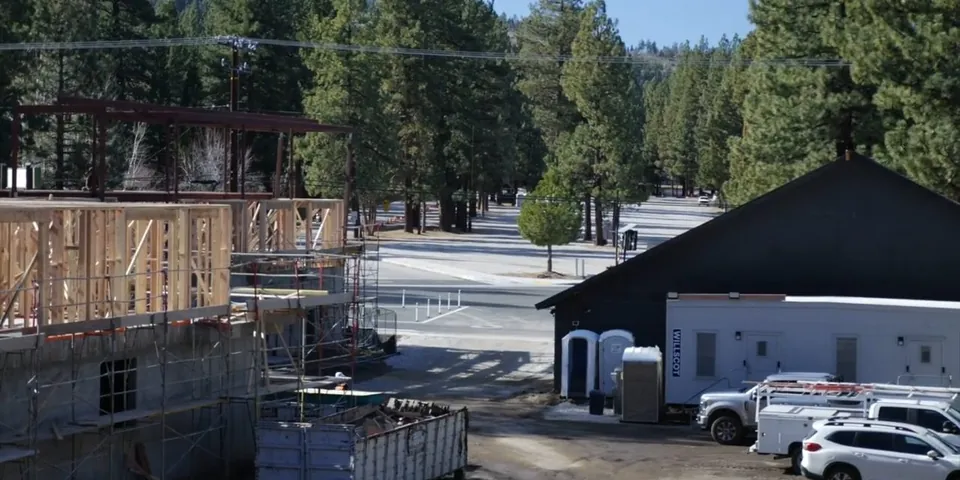
Boutique hotel exterior used for a plumbing buildout for The Plumbing Inside Lakewood’s Original Lakewood Park Corporation Homes
The visible boutique hotel exterior used for a plumbing buildout shows what technicians look for during The Plumbing Inside Lakewood’s Original Lakewood Park Corporation Homes work.

Building Lakewood at 110 Homes Per Day

The Lakewood Park Corporation, a partnership of developers including Ben Weingart, Louis Boyar, and Mark Taper, broke ground on the Lakewood project in March 1950 and completed construction at a pace that was unprecedented in American residential development history. At the peak of production in 1952, the corporation reportedly completed 110 homes in a single day. The overall project delivered 17,500 homes by the time the original Lakewood community was substantially complete in 1953, at which point Lakewood was the largest housing development in the United States and a model for the postwar suburban expansion that reshaped American cities throughout the 1950s and 1960s.

The extraordinary production rate required a standardized approach to every building system, including plumbing. There was no room in the production schedule for custom or variable plumbing configurations; every home received the same pipe materials, the same fixture layout, and the same supply and drain system architecture. The choices the corporation made in 1950 about which pipe materials to use are now determining the plumbing service needs of 17,500 Lakewood households 72 to 75 years later.

The Pipe Materials Used in the Original Builds

Supply Pipe: Galvanized Steel Throughout

The Lakewood Park Corporation installed galvanized steel supply pipe throughout every home in the original 1950 to 1953 build. Galvanized steel was the standard residential supply material in 1950, readily available from Los Angeles area distributors, familiar to all plumbing subcontractors, and priced appropriately for the mass-production environment of the Lakewood project. The service lateral from the city water main to the meter, the main supply line from the meter to the house, and every branch supply run to individual fixtures were all galvanized steel. The corporation used standard-dimension pipe in the appropriate diameters: typically three-quarter inch for main supply lines and half-inch for fixture branch runs, joined with threaded galvanized steel fittings throughout.
Drain System: Cast Iron Stack and Clay Lateral

The drain and waste system in the original Lakewood Park Corporation homes used hub-and-spigot cast iron pipe for the interior drain stacks and branch drain connections, and hub-and-spigot vitrified clay pipe (VCP) for the sewer lateral from the house to the city main. Cast iron was the standard drain material for residential construction in 1950, heavy and durable but prone to interior microbially induced corrosion over long service lives. Clay pipe was similarly the standard for underground sewer laterals, with the bell-and-spigot joint system that was widely used from the early 20th century through the mid-1960s. Both materials were appropriate choices for 1950 construction with a design life of approximately 40 to 50 years.

What “Standard Construction” Meant in 1950

The plumbing systems in the original Lakewood Park Corporation homes were not inferior to the standard of their time; they were the standard of their time. Galvanized steel, cast iron, and clay pipe were what every residential plumber in Southern California was installing in 1950, and the quality of the Lakewood Park Corporation's installation was adequate for the production environment and the construction era. The problem is not that the original systems were poorly made; the problem is that they were designed for a service life of 40 to 50 years, and they have now been in service for 72 to 75 years. At this age, the three original pipe materials are all at or past the end of their expected service life simultaneously.

What 72 to 75 Years Looks Like Inside These Homes Today

A Lakewood Park Corporation home from 1951 that has never had any supply or drain system work is presenting the following conditions in 2025. The galvanized supply pipe has interior bore restriction from iron oxide accumulation that reduces the original half-inch bore to as little as one quarter inch in heavily corroded sections, producing household water pressure that may be half or less than its original delivery pressure. Threaded fittings in the galvanized system have corroded at the threaded connections, producing the slow drips and fitting failures that require periodic repair. The supply runs under the slab, where the galvanized is in contact with concrete and soil moisture, have experienced more severe corrosion than the above-slab sections and may have multiple points of incipient failure.

The cast iron drain stacks have developed interior surface corrosion from decades of hydrogen sulfide exposure from the waste stream. The rough interior surface promotes grease and debris accumulation, producing the slow drain cycle that becomes recurring despite periodic cable cleaning. The clay sewer lateral has developed root intrusion at the bell joints from the 70-plus-year-old trees that were planted as street and yard improvements in the early 1950s. Camera inspection of the original clay lateral almost universally reveals root intrusion in 1950 to 1953 Lakewood homes that have not had lateral work performed.

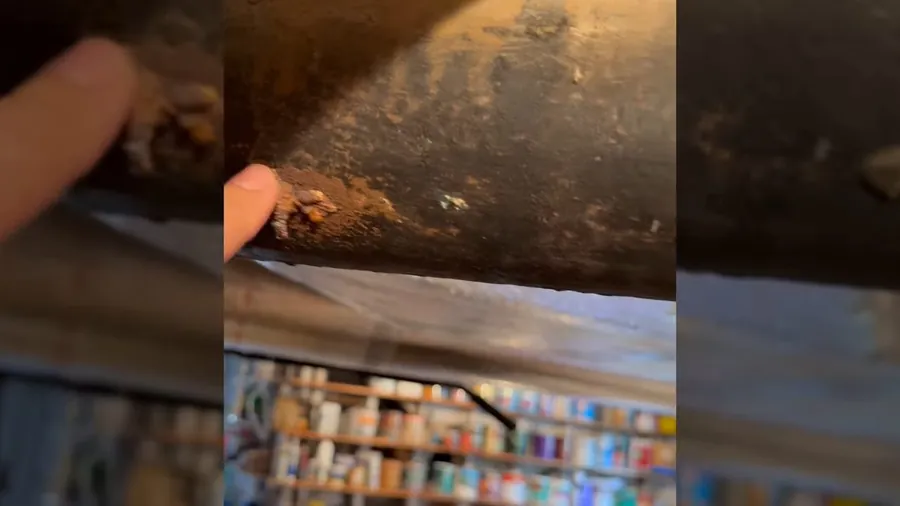
Old cast iron drain pipe with corrosion and scaling for The Plumbing Inside Lakewood’s Original Lakewood Park Corporation Homes
This view of old cast iron drain pipe with corrosion and scaling helps explain the repair details discussed for The Plumbing Inside Lakewood’s Original Lakewood Park Corporation Homes.

Which Original Systems Have Been Replaced and Which Have Not

Many original Lakewood Park Corporation homes have had some portion of their plumbing systems replaced over the past 75 years, but the replacements have typically been partial rather than comprehensive. The most common previous work we find in 1950 to 1953 Lakewood homes is a water heater replacement (typically performed every 10 to 15 years as water heaters reach the end of their service life), isolated fitting repairs at galvanized supply joints that failed, and in some cases a slab reroute or spot repair for a previous slab leak. What we rarely find is a home where the entire galvanized supply system, including the service lateral, all interior supply distribution, and the slab-enclosed sections, was comprehensively replaced as a single project.

The result is that most 1950 to 1953 Lakewood homes in 2025 have a supply system that is largely original galvanized at 72 to 75 years of age, with isolated sections of newer pipe where previous spot repairs or reroutes were performed. The drain system is similarly mixed in many homes: a new cast iron section where a previous drain repair was made, but the original cast iron for the main stack and the original clay lateral still in place. Understanding which sections are original and which have been previously replaced is an important part of any comprehensive plumbing assessment in an original Lakewood Park Corporation home.

Planning for Your Original Lakewood Home’s Plumbing Future

If your Lakewood home is from the original 1950 to 1953 Lakewood Park Corporation build and has not had a comprehensive plumbing system assessment in the past five years, scheduling one now gives you the information to plan proactively rather than reactively. A comprehensive assessment covers the supply system (pipe material identification, pressure measurement, bore restriction assessment, and slab section condition), the drain system (camera inspection of the main drain stack and sewer lateral), and a written summary of findings with prioritized service recommendations based on what we find.

For original Lakewood Park Corporation homes, the most common outcome of a comprehensive assessment is a clear recommendation for whole-home galvanized-to-PEX repiping and sewer lateral CIPP trenchless lining as the two most impactful projects for the long-term plumbing health of the property. We provide written estimates for both projects, along with a phased approach if doing both simultaneously is not the right choice for your budget and timeline. Call (562) 358-3931 to schedule a comprehensive plumbing assessment for your original Lakewood Park Corporation home.

Comprehensive Plumbing Assessment for Original Lakewood Homes

Written supply and drain assessment for 1950–1953 Lakewood Park Corporation homes. Serving Lakewood and SE LA, 24/7.

Call (562) 358-3931