
Licensed & Insured · 24/7 Emergency Plumber · Serving Lakewood & SE LA Call (562) 358-3931

Why Slab Leaks Are So Common in Lakewood’s 1950s Slab-on-Grade Homes

Three factors converge in Lakewood to make slab leaks particularly common: universal slab-on-grade construction, aging galvanized and early copper supply pipe, and hard Central Groundwater Basin water that accelerates pipe deterioration at slab-contact zones.

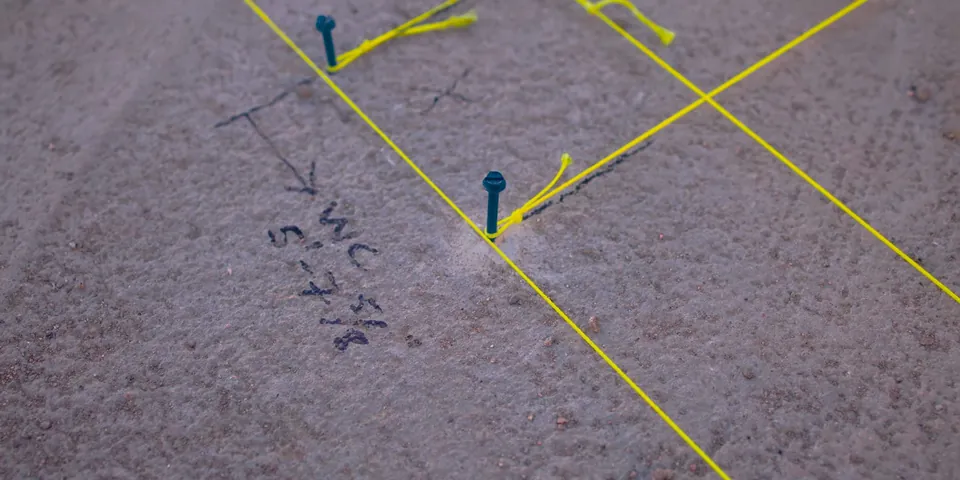
Slab floor marked with pipe routing lines for Why Slab Leaks Are So Common in Lakewood’s 1950s Slab-on-Grade Homes
The visible slab floor marked with pipe routing lines shows what technicians look for during Why Slab Leaks Are So Common in Lakewood’s 1950s Slab-on-Grade Homes work.

What Is Slab-on-Grade and Why Is It Universal in Lakewood?

Slab-on-grade construction is a building method in which the house sits on a poured concrete slab rather than on a raised foundation with crawlspace underneath. The Lakewood Park Corporation used slab-on-grade construction almost exclusively throughout its 1950 to 1965 build, for reasons that were entirely practical: slab-on-grade is faster and less expensive to build than raised-foundation construction, it works well on the flat alluvial plain that characterizes Lakewood's geography, and it was well suited to the production-rate environment of the Lakewood Park Corporation's mass housing construction. The result is that Lakewood is a slab city: virtually every single-family home in Lakewood sits on a concrete slab with no crawlspace below.

This has a direct consequence for plumbing: supply lines in a slab-on-grade home run through or under the concrete slab rather than through accessible crawlspace. This means that galvanized and copper supply pipes in Lakewood homes have been embedded in or in contact with the concrete and the soil beneath it for 60 to 75 years. The slab-contact environment is the most corrosive section of the supply system, and it is where both galvanized and copper pipe develop their most severe failures.

What Happens to Pipes Under a Slab Over 70 Years

The Problem With Galvanized Under the Slab

Galvanized steel pipe in direct contact with concrete or moist soil corrodes from both the exterior and the interior simultaneously. Interior corrosion from rust buildup is the failure mode visible in above-slab galvanized, but at slab level, the exterior of the pipe is also exposed to moisture and minerals from the concrete matrix and the soil. The dual-direction corrosion at the slab interface accelerates pipe wall thinning compared to above-slab galvanized sections, which is why slab-level galvanized sections are typically the first to fail in a Lakewood home even when the above-slab galvanized appears to have years of remaining life. When galvanized fails at the slab, it typically fails as a through-wall pinhole or fitting gap rather than as a gradual seep, producing a supply loss that reaches the surface as a warm wet spot on the floor above the failure point.

The Problem With Early Copper Under the Slab

Copper at slab level fails through a different mechanism than galvanized, but the result is similar. Early-era copper from the late 1950s and early 1960s is a relatively pure copper tubing of standard wall thickness. At 60 to 67 years of age, in direct contact with concrete that has absorbed mineral-rich groundwater over decades, copper develops electrochemical corrosion at the points where the pipe surface contacts the concrete or where moisture accumulates. Thermal cycling, as the hot water supply line alternates between carrying hot water and returning to ambient temperature over decades, also contributes to micro-fatigue at the copper wall. The cumulative result is wall thinning that eventually produces a pinhole failure at the slab-contact zone.

The Three Conditions That Drive Lakewood Slab Leaks

Hard Well Water Chemistry

Lakewood receives all of its water supply from deep wells in the Central Groundwater Basin, with no Metropolitan Water District imported supply blended in. This means Lakewood's water is naturally high in dissolved minerals, particularly calcium and magnesium, with total dissolved solids well above 300 parts per million. The mineral content in Lakewood's well water accelerates the calcium deposit formation that occurs at pinhole sites in aging copper, and contributes to the interior iron oxide buildup in galvanized pipe. The hard water chemistry is a primary accelerant for slab leak development in both pipe material types throughout Lakewood's housing stock.
Thermal Cycling at Slab-Contact Zones

Hot water supply lines under the slab in Lakewood homes have gone through tens of thousands of thermal cycles over their service life, expanding when carrying hot water and contracting when the water cools. Each cycle introduces micro-stress at the points where the pipe is in contact with rigid concrete, because the concrete does not expand and contract at the same rate as the copper or galvanized pipe inside it. Over decades, these repeated micro-stresses produce fatigue in the pipe wall at slab-contact points, making those locations the most failure-prone sections of the entire supply system.

Soil Movement and Concrete Microcracking

The alluvial soil underlying Lakewood's residential slabs has undergone 70 years of seasonal moisture variation, compaction from the overlying structure, and minor seismic loading from the seismically active Southern California environment. This soil movement produces microcracking in the concrete slabs over time, and those microcracks allow moisture to reach the pipe wall at previously dry contact points. New moisture exposure at aged pipe creates new corrosion initiation sites, and the combination of new corrosion and existing thermal cycling fatigue at these newly wet pipe sections accelerates failure development.

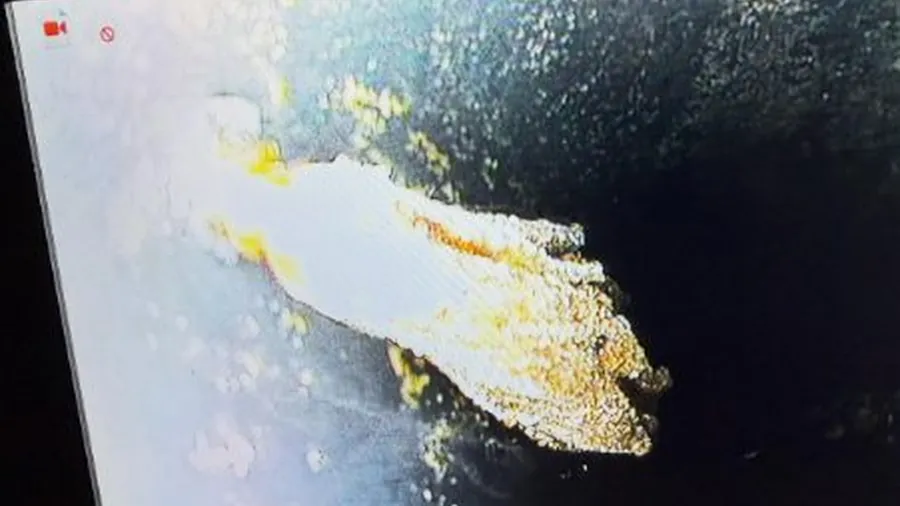
Camera screen showing a suspected leak area for Why Slab Leaks Are So Common in Lakewood’s 1950s Slab-on-Grade Homes
This view of camera screen showing a suspected leak area helps explain the repair details discussed for Why Slab Leaks Are So Common in Lakewood’s 1950s Slab-on-Grade Homes.

How We Detect Slab Leaks Without Breaking Concrete

Modern slab leak detection uses non-destructive methods to locate the failure point before any concrete access is opened. Our detection sequence starts with acoustic listening: electronic sensors placed on the slab surface detect the ultrasonic frequencies produced by pressurized water escaping through a pipe wall pinhole. The acoustic signal localizes the approximate failure area to within a few feet in most cases, which is sufficient to narrow the access point for any repair that requires concrete removal.

When the acoustic signal is not sufficiently definitive, thermal imaging provides a secondary confirmation: a slab leak in a hot water supply line produces a temperature differential at the slab surface above the failure point, visible as a warm spot in infrared imaging. For longer or more complex supply runs where the leak may be several feet from the surface thermal anomaly, electronic pipe correlation equipment can pinpoint the failure location more precisely. We use whichever combination of these methods is appropriate for each specific leak scenario, and we confirm the failure location before proposing any access approach.

Repair Options for Lakewood Slab Leaks

Once a slab leak is located, the appropriate repair approach depends on the pipe material, the overall pipe condition, and the leak location. For an isolated failure in an otherwise sound section of pipe, a spot repair through a targeted concrete access opening is the least disruptive and least expensive option. For a failure in a section of pipe that shows evidence of additional thinning or corrosion near the failure point, a slab reroute (running a new supply line above the slab through the attic or wall space to bypass the failed slab section) eliminates the need to return to the same area for a second repair. For a home where the slab leak is the latest in a pattern of supply failures at different locations, a whole-home repipe from galvanized or copper to PEX addresses the underlying pipe condition rather than individual failures and ends the recurring repair cycle. We provide written estimates for all three options at every slab leak assessment, so you can choose the approach that best fits the pipe condition and your budget. Call (562) 358-3931 for slab leak detection or any plumbing service in Lakewood.

Slab Leak Detection in Lakewood, CA

Acoustic and thermal detection before any concrete is opened. Written estimates for all repair options. Serving Lakewood and SE LA, 24/7.

Call (562) 358-3931