Sign 1: Low Water Pressure Throughout the House
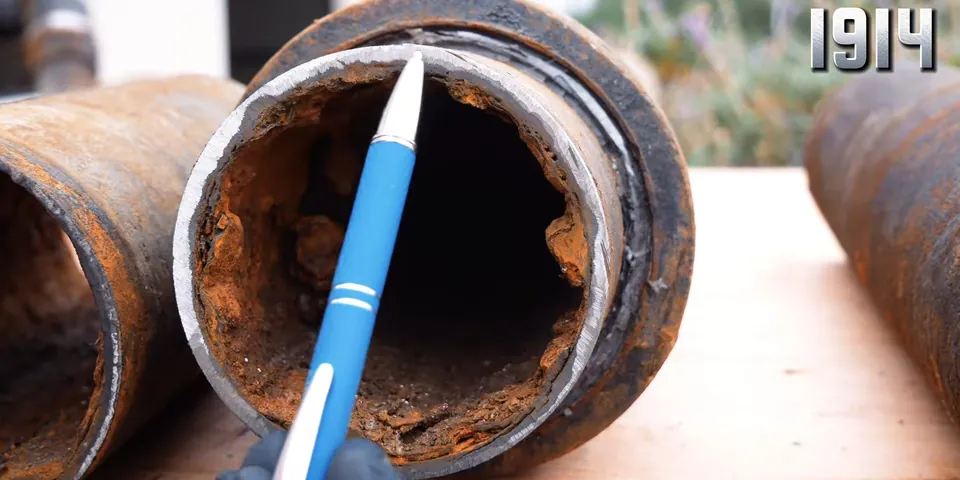
If the water pressure in your Lakewood home has declined noticeably over the past several years, and the decline affects all fixtures rather than just one, the most likely cause in a home with original galvanized supply is bore restriction from interior corrosion buildup. A galvanized pipe that has lost half its interior diameter to rust deposits delivers roughly one quarter of its original flow rate, because flow rate through a pipe scales with the square of the diameter. Pressure loss that appears at the showerhead, at the kitchen faucet, and at the garden hose simultaneously is the signature of a bore-restricted galvanized supply system rather than a localized fixture issue.
Sign 2: Rust-Tinted or Discolored Water
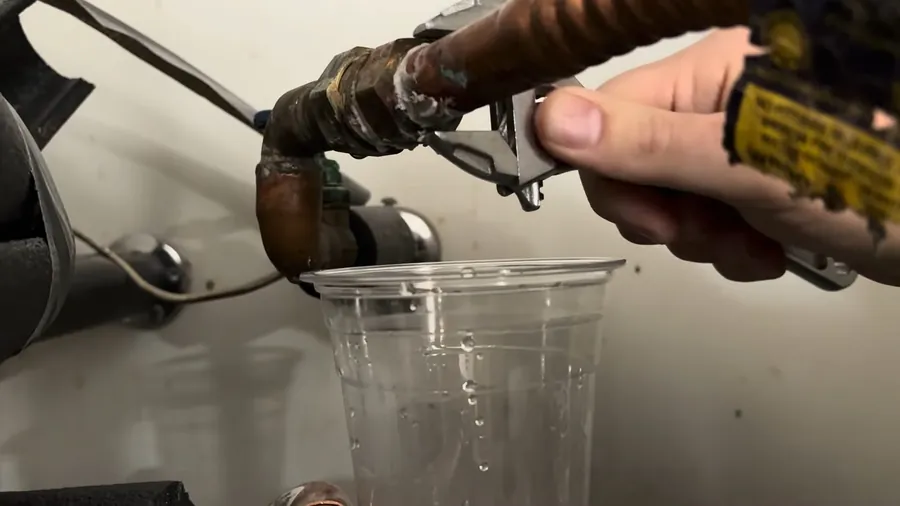
Rust-tinted water in a Lakewood home with galvanized supply, particularly at first draw in the morning or after the water has been undisturbed overnight, is a direct indication of iron oxide shedding from the pipe interior wall. The discoloration is typically most visible in the bathtub or sink where water pools, and it may appear brown, orange, or reddish. Filling a clear glass from the cold tap first thing in the morning is the simplest test: if the water appears tinted rather than clear, your galvanized supply is shedding rust. This is not just an aesthetic issue; iron oxide particles in the water supply can affect appliances, laundry, and water quality.
Sign 3: Recurring Fitting Failures at Different Locations
Galvanized pipe is joined with threaded fittings. As the pipe corrodes internally, the corrosion also progresses at the threaded joints, which are the thinnest-walled sections of the galvanized system. Fitting failures in galvanized supply typically appear as pinhole leaks at threaded connections, producing small drips or wet spots at joints under sinks, at the water heater connections, or at visible supply runs. When these failures start occurring at different locations within a two to three year period, rather than being a one-time isolated event, the system as a whole is in the failure progression rather than experiencing an isolated joint failure. This recurring multi-location pattern is the primary indicator that a whole-home repipe is more cost-effective than continued spot repair.
Sign 4: Metallic Taste or Odor in the Water
Lakewood's groundwater supply from the Central Groundwater Basin deep wells is naturally high in dissolved minerals but does not typically have a metallic taste when it enters the distribution system. If the water from your taps has a metallic taste or odor, particularly at first draw, and your Lakewood home has original galvanized supply, the most likely source is iron oxide from the pipe interior. The metallic taste is more pronounced when the supply has been standing overnight in deteriorated galvanized pipe. This symptom is often the first one homeowners notice in the early stages of galvanized deterioration, before low pressure and rust discoloration become obvious.
Sign 5: Slab Leaks That Keep Recurring
Galvanized supply runs at the slab level, where the pipe is in contact with concrete and the underlying soil, are often the first section of the galvanized system to fail completely. If you have had a slab leak repaired in the past few years and are now experiencing another supply loss under the slab, the pattern indicates that the galvanized pipe under the slab is at the multi-point failure stage. Each new slab failure in a system-wide deterioration scenario will cost approximately the same to repair individually but will reappear in a new location within one to three years. At this stage, whole-home repiping is the only way to end the recurring repair cycle.