Galvanized Pipe vs. PEX: What Lakewood Homeowners Are Choosing When They Repipe
When a Lakewood homeowner decides to repipe, the replacement material is almost always PEX. Here is why PEX is the standard choice for replacing Lakewood’s aging galvanized steel supply, and what makes it well suited to the specific conditions of Lakewood’s 1950s slab-on-grade homes.
Why Galvanized Is Being Replaced, Not Repaired
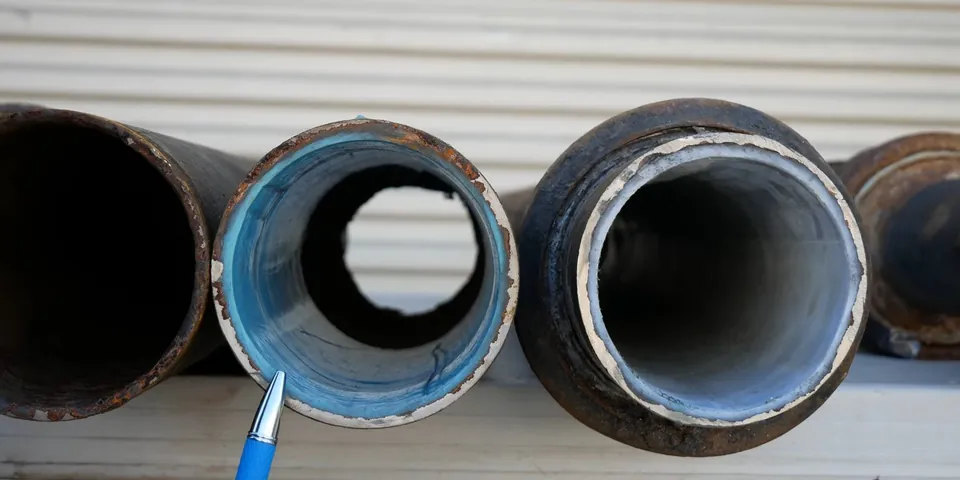
Galvanized steel supply pipe at 65 to 75 years of age in a Lakewood home is not a repair situation; it is a replacement situation. The interior corrosion that narrows the bore, the recurring fitting failures at threaded joints, and the slab-level deterioration in the most corrosion-exposed sections of the system are all symptoms of a pipe that has exceeded its design life throughout the entire system, not just at the locations where failures have appeared so far. Repairing individual galvanized fittings or sections extends the life of a deteriorated system temporarily but does not address the overall pipe condition that is producing the failures.
The decision to repipe rather than continue spot-repairing galvanized supply is typically reached when a Lakewood home has had two or more failures at different locations within a two to three-year period, or when a professional assessment reveals severe bore restriction throughout the system even before failures have begun appearing. At that point, the question is not whether to replace the galvanized supply but what to replace it with. In the current Lakewood repipe market, the answer is PEX in the overwhelming majority of cases.
What PEX Is and How It Differs From Galvanized
PEX is cross-linked polyethylene, a flexible plastic tubing that was developed for hydronic heating applications in Europe in the 1970s and adopted for residential supply plumbing in North America from the 1980s onward. PEX supply tubing is joined using mechanical fittings rather than threaded connections or soldering, does not corrode, does not develop mineral scale buildup on its interior wall from hard water, and is flexible enough to be routed through tight spaces and around obstacles without requiring elbows at every direction change.
The contrast with galvanized supply pipe is substantial across every relevant characteristic. Galvanized corrodes from the inside, narrowing the bore over decades. PEX does not corrode. Galvanized develops mineral scale at fitting threads. PEX fittings are mechanical and do not accumulate scale at the connection points. Galvanized is rigid and requires a threaded or soldered fitting at every direction change. PEX is flexible and can navigate corners with a single bend. Galvanized has a design life of 40 to 50 years under normal conditions. PEX has an expected service life of 50 years or more under typical residential conditions, with some manufacturers rating PEX-A at significantly longer service life under controlled testing conditions.
Why PEX Works Especially Well in Lakewood’s Slab Homes
Flexibility for Attic Routing Through Original Walls
Lakewood's slab-on-grade homes require a specific repipe approach: since there is no crawlspace below, the new supply lines must be routed above the living space through the attic and then down through the interior walls to reach each fixture. PEX's flexibility is a critical advantage for this attic-and-wall routing approach. A single PEX tube can navigate from the water heater connection in the garage, up through the exterior wall framing, across the attic to the other side of the house, and down through interior wall framing to a bathroom supply valve, all in a single continuous run without requiring a fitting at every direction change. Copper or galvanized supply would require a threaded or soldered fitting at every 90-degree turn, significantly increasing both labor time and the number of potential leak points in the new system.
Resistance to Lakewood’s Hard Well Water
Lakewood's Central Groundwater Basin supply, with total hardness typically above 300 parts per million, is a challenging water chemistry environment for supply pipe. Galvanized pipe accelerates its interior corrosion rate in hard water. Copper develops mineral deposits at pinhole sites and at fitting connections when exposed to hard water over long periods. PEX is not affected by water hardness in the way that metal pipes are; the polymer interior surface does not accumulate iron oxide or calcium carbonate deposits, and there is no electrolytic interaction between the pipe material and the dissolved minerals in Lakewood's hard groundwater supply. For the lifetime of the new PEX supply system, Lakewood's hard well water will not produce the bore restriction and fitting failure issues that it causes in galvanized steel systems.
PEX-A vs. PEX-B: The Two Types Used in Lakewood Repipes
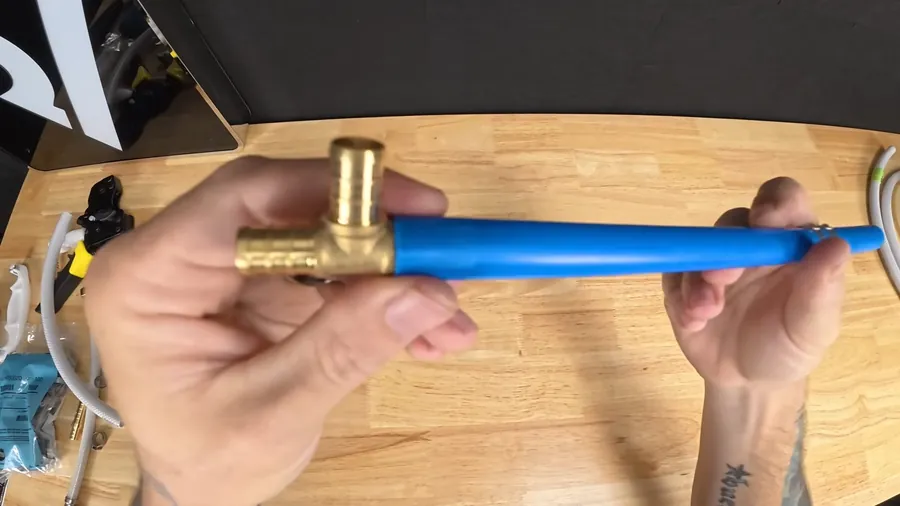
There are two main PEX formulations used in residential repipes in California: PEX-A and PEX-B. The designation refers to the manufacturing process used to create the cross-linking in the polyethylene, not a quality grade. PEX-A (also called Engel-method PEX or expansion PEX, with Uponor/Wirsbo being the most common brand) uses expansion fittings: the tube end is expanded with a special tool, a brass fitting is inserted, and the tube's memory causes it to compress tightly around the fitting as it returns to its original diameter. PEX-B (which includes brands like Viega, Watts, and others) uses crimp or clamp ring fittings that mechanically compress the tube onto the fitting barb. Both systems are approved for use in California and have been installed in millions of homes without issues. PEX-A expansion fittings are considered to provide a slightly more reliable joint in conditions of thermal cycling and are generally preferred by contractors who do high volumes of repipe work.
For Lakewood homeowners having a repipe done, the specific fitting system is less important than the contractor's experience with that system and the quality of the installation. Both PEX-A and PEX-B have excellent track records when installed correctly, and both carry substantial manufacturer warranties on the tubing and fittings.
What the PEX Repipe Process Looks Like in a Lakewood Home
A whole-home PEX repipe in a Lakewood Park Corporation-era home typically takes one to two days for a standard single-story house. The process: the water service is shut off at the meter; the new PEX supply lines are routed from the new water heater supply connection through the attic to each fixture location; wall penetrations are made through the top plates of each wall section to feed the PEX down to the fixture connection point; new supply stop valves are installed at each fixture; the old galvanized supply is disconnected and abandoned in place (removing it from under the slab is not practical and not necessary); the new system is pressure-tested before the service is restored; and the wall penetrations are patched if wall patching is included in the scope. City of Lakewood permits are required, and the installation is inspected by the Lakewood Building and Safety Department before the wall patching is completed.
Call (562) 358-3931 for a whole-home repipe assessment and written estimate for your Lakewood home. We serve all of Lakewood and the surrounding SE LA service area.
Get a Written PEX Repipe Estimate for Your Lakewood Home
Free written repipe estimate with material specification and permit cost included. Serving Lakewood and SE LA, licensed and insured.
Call (562) 358-3931